 Glass
GlassLaminated vs tempered — which windows on your car are which
One cracks and holds together. The other turns into several thousand blunt granules. Which is which decides how the job is done.
Written by the Glass Genie team. Technical review by a named technician is pending — see our editorial approach.
There are two kinds of glass on your vehicle, and almost everything about how a job is quoted, done and cleaned up follows from which one you are dealing with.
Laminated glass
Two layers of glass bonded to a plastic interlayer, usually PVB, under heat and pressure. Effectively a glass sandwich.
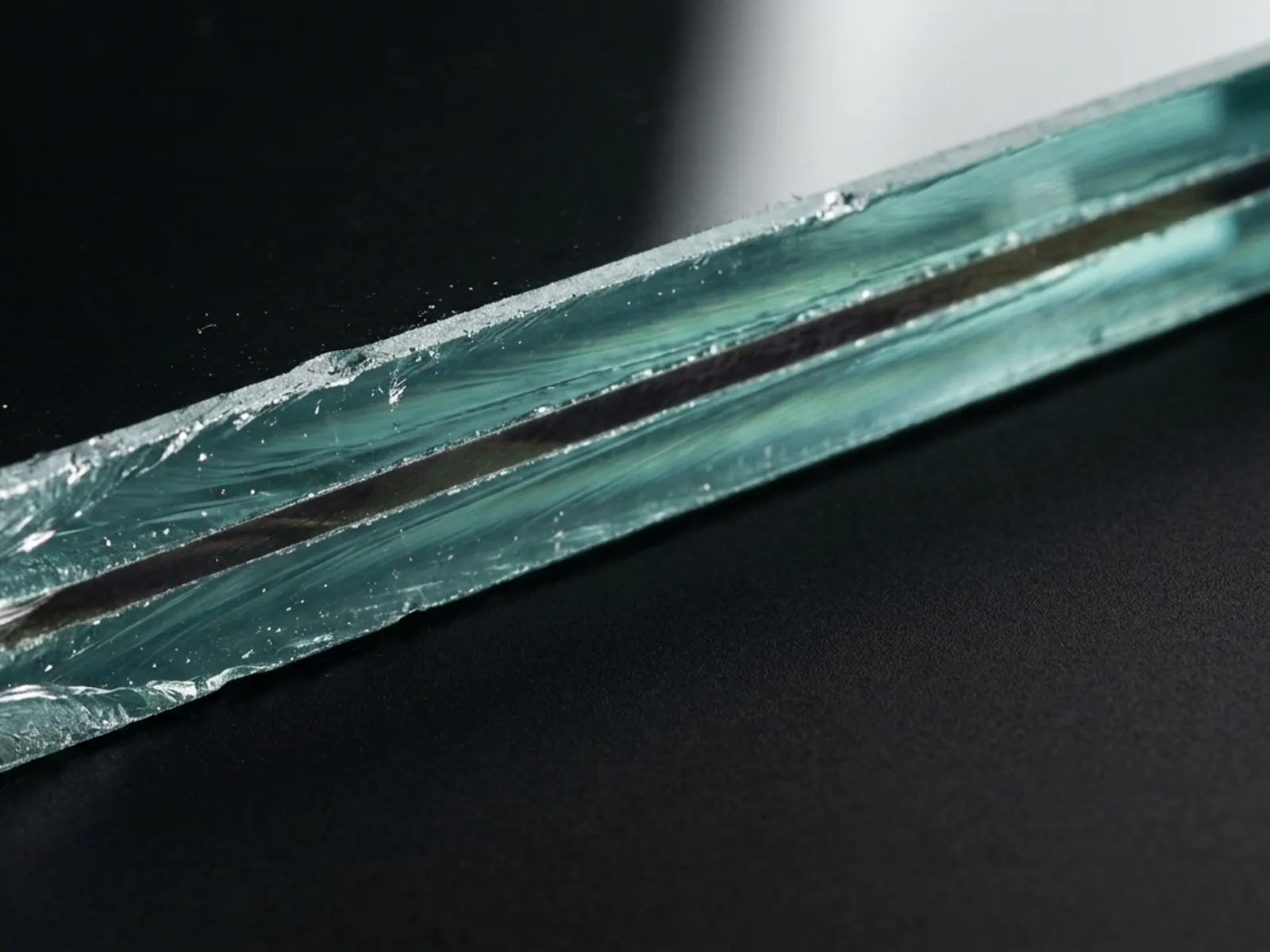
Break it and the glass cracks, but the interlayer holds the fragments in place. The pane stays in one piece and stays roughly transparent. This is why a cracked windshield still functions as a windshield.
That behaviour is exactly why windshields are laminated. In a collision the windshield needs to stay in its aperture — it is bonded structure, it supports the roof in a rollover, and on most vehicles it is the surface the passenger airbag inflates against. Glass that fell out of the frame on impact would remove all three functions at once.
Two useful side effects: laminated glass blocks most ultraviolet light, and the plastic interlayer damps sound, which is why acoustic laminated glass is used where cabin quiet matters.
Where you will find it: every windshield, and increasingly the front side windows on quieter or more security-conscious vehicles.
Can it be repaired? Yes — this is the glass that resin repair works on. The resin fills a void in the outer layer. See repair or replace.
Tempered glass
A single layer of glass heated and then cooled very rapidly. This puts the outer surfaces into compression and the core into tension, locking permanent stress into the pane. The result is considerably stronger than ordinary glass of the same thickness.
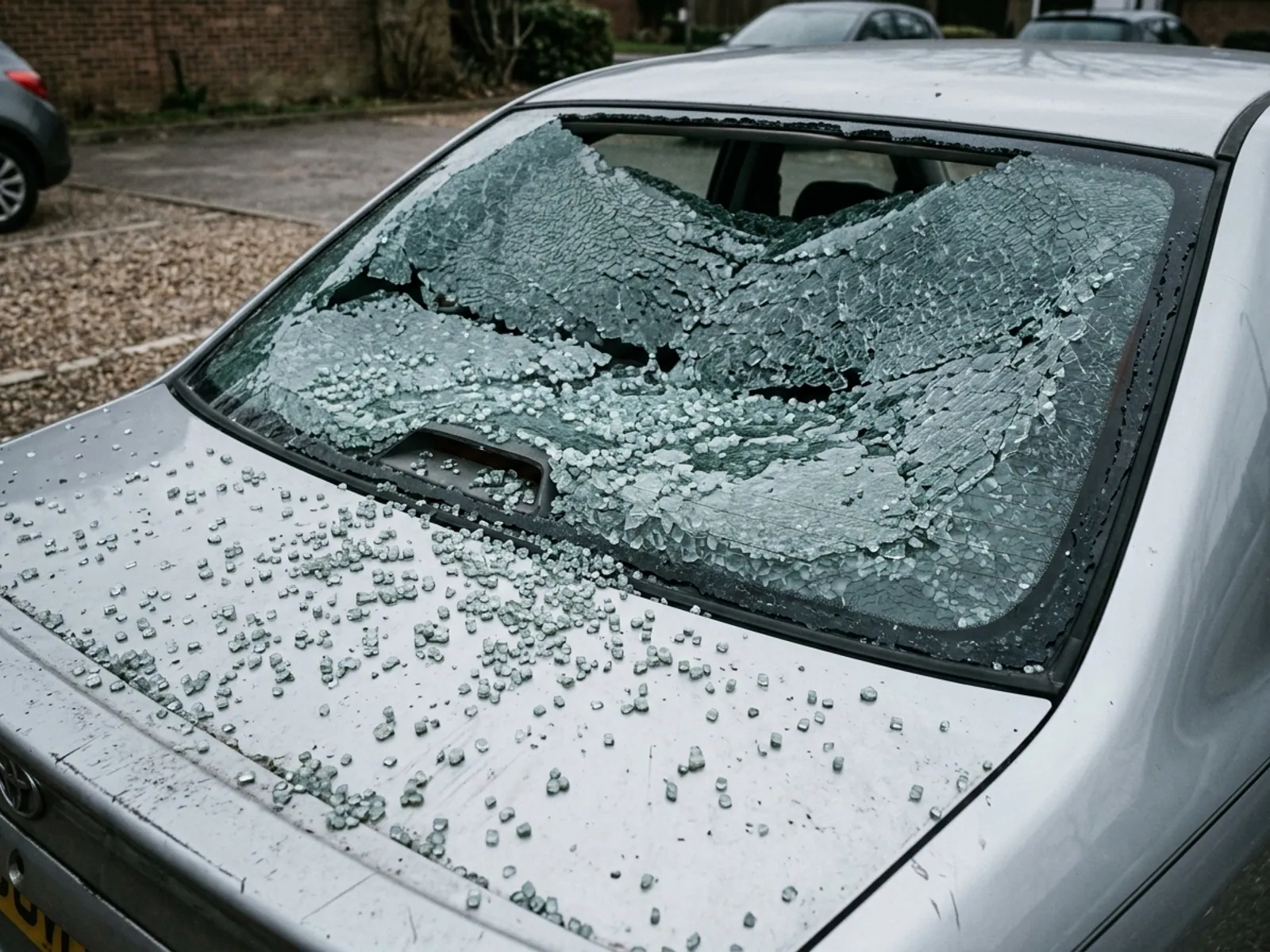
But when it does fail, all that stored stress releases at once and the entire pane converts into several thousand small, relatively blunt granules — instantly, across the whole window.
That is by design. The alternative, plate glass, breaks into large blade-like shards, which in a car is unacceptable. Tempered glass is engineered to fail safely rather than to resist failing.
It also explains three things people find surprising:
- It fails all at once. There is no such thing as a slowly cracking side window.
- It can fail apparently spontaneously. A small edge defect, a stone strike on a sunroof, or thermal stress can be enough to release the locked-in stress days or weeks later. Panoramic roof panels are the most common example.
- It cannot be cut or drilled after tempering. Every hole and edge is formed before the tempering process, which is why glass is specified so precisely.
Where you will find it: most door glass, most quarter glass, most back glass, most sunroof panels, vent glass.
Can it be repaired? No. There is no partial damage to repair — it is either intact or it is granules. Tempered glass is always a replacement.
Side by side
| Laminated | Tempered | |
|---|---|---|
| Construction | Two glass layers + plastic interlayer | Single heat-treated layer |
| On failure | Cracks, stays in one piece | Shatters completely into granules |
| Repairable | Yes, within limits | No |
| Typical use | Windshield, some front side glass | Door, quarter, back glass, sunroof |
| UV blocking | High | Limited |
| Sound damping | Good | Limited |
| Installation | Usually bonded with urethane | Usually set in a channel or regulator |
| Cure time before driving | Yes, on bonded installs | None |
Why this changes the job
Clean-up. A shattered tempered window puts granules into the door cavity, the seat rails, the carpet and the boot. On a back glass it reaches the whole interior. Extraction is genuinely most of the labour, and a rushed job means rattles and a ground-down regulator later.
Cure time. Bonded laminated glass needs adhesive cure before the vehicle is safe to drive. A tempered side window set into a regulator does not — you drive immediately.
Urgency. A cracked windshield is unpleasant but the vehicle is still secure. A shattered door window means the vehicle is open. Those are different phone calls.
Cost. Laminated glass costs more to produce. A windshield is also physically larger and carries more features than a door glass.
How each is actually made
Worth understanding, because the manufacturing explains the behaviour.
Laminated. Two sheets of glass are cut, washed, and heated over a mould until they sag into the vehicle's curvature under their own weight. A sheet of plastic interlayer — usually polyvinyl butyral — goes between them, and the sandwich is pressed and heated in an autoclave until the plastic bonds permanently to both faces.
The interlayer is the whole point. It is what holds fragments when the glass breaks, and it is what can be modified: an acoustic interlayer damps sound, a tinted one creates a shade band, a thicker one improves security.
Tempered. A single sheet is cut to final shape — including every hole and every edge — then heated to around its softening point and blasted with cold air across both faces.
The surfaces cool and solidify first. The core cools afterwards and tries to contract, but the already-rigid surfaces resist it. The result is a pane with its outer faces locked in compression and its core in tension.
That is why tempered glass is strong: a crack has to overcome surface compression before it can start. And it is why it fails the way it does: once something reaches the tensioned core, all the stored energy releases at once.
It is also why tempered glass cannot be cut or drilled afterwards. Any cut into the core releases the stress and destroys the pane. Every hole and edge is formed before tempering, which is why glass specification has to be exact.
Why the windshield gets the expensive treatment
Manufacturers do not use laminated glass in windshields for the sound damping. They use it because the windshield is doing three structural jobs:
Roof crush resistance. In a rollover, a bonded windshield contributes meaningfully to the front structure's ability to resist collapse.
Airbag backstop. On most vehicles the passenger airbag does not inflate directly toward the occupant. It inflates upward and forward, uses the inside of the windshield as a reaction surface, and is deflected into position. A windshield that departed the vehicle would take the airbag with it.
Occupant retention. Laminated glass keeps an unbelted occupant inside the vehicle in a way tempered glass cannot.
None of those work if the glass leaves the frame, which is why windshields are bonded rather than gasket-set, and why the adhesive cure matters as much as the glass itself.
Laminated side glass is becoming common
Historically simple: windshield laminated, everything else tempered. That is changing.
More vehicles now use laminated front side glass, for three reasons:
- Noise. A quiet cabin is a selling point, and side glass is a significant noise path.
- Security. Laminated glass is considerably harder to break through quickly, which matters for smash-and-grab entry.
- Occupant retention in side impacts and rollovers.
Two consequences for owners:
Cost. Laminated side glass is more expensive than tempered.
Behaviour on failure. It cracks and holds rather than granulating, which means a damaged door window may still be in place and still be a replacement. It also means a break-in attempt may leave a spidered but intact window.
If your side window cracked rather than shattering, you have laminated side glass. See door glass replacement.
How to tell what you have
Look at the edge of the glass, at the top of the door frame with the window down. Laminated glass shows a faint darker line through the thickness — the interlayer. Tempered glass is uniform.
There is also a marking etched into a corner of every pane, usually near the bottom. It will say laminated or tempered along with the manufacturer and certification marks.
Not sure which glass you are dealing with, or which service you need? Windshield replacement covers laminated front glass; auto glass replacement covers everything else. Or just send a photo and we will identify it.
Sources
Where this guide makes a technical, safety or regulatory claim, these are the references behind it.