 Glass
GlassDallas & DFW · Mobile service
Auto glass replacement: every window on the vehicle
Replacement of any glass on the vehicle — windshield, door glass, quarter glass, back glass, vent glass and sunroof — with the right approach for laminated versus tempered glass.
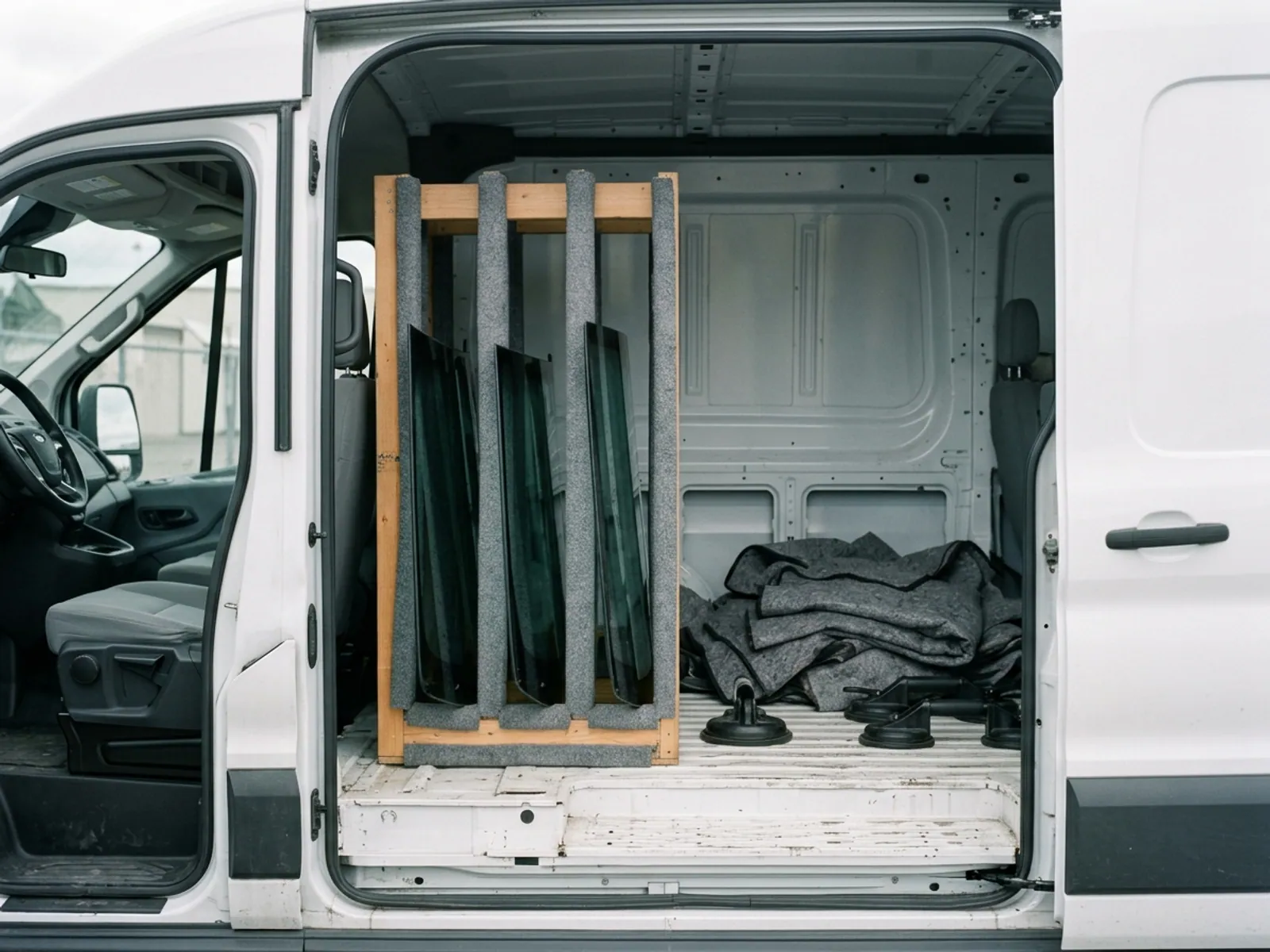
Not all automotive glass is the same material, and the difference decides how the job is done. Windshields are laminated: two layers of glass bonded to a plastic interlayer, which is why a windshield cracks but stays in one piece. Most other windows are tempered: heat-treated to be strong, and designed to shatter into small blunt granules rather than shards when it fails.
That single distinction drives everything downstream. A laminated windshield is bonded in with urethane and needs cure time. A tempered side window is usually held in a regulator and channel, needs no adhesive cure, and leaves several thousand fragments through the door cavity and your carpet that have to be vacuumed out properly.
If you already know which window it is, go straight to that page. If you are not sure what you are looking at, the summary below will place it.
Is this you?
When you need auto glass replacement
- Any glass on the vehicle is broken, cracked or shattered.
- A break-in has taken out a side or quarter window.
- A window has failed and the opening needs securing quickly.
- You are not sure which type of glass you have or which service you need.
What actually happens
The job, step by step
No mystery and no jargon for its own sake. This is what a technician does and why each step matters.
Identify the glass
Position on the vehicle, laminated or tempered, and which features it carries — defroster grid, antenna, tint, privacy glass, encapsulated moulding.
Source the correct part
Confirmed against the VIN. Body style matters enormously here: a coupe, sedan and wagon of the same model do not share side or quarter glass.
Contain and clear
On a shattered tempered window, fragments go everywhere — inside the door cavity, in the seat rails, in the carpet. Thorough extraction is most of the labour and it is the part that gets skimped.
Fit
Bonded glass is set in urethane and cured. Regulator-mounted glass is fitted into the channel, aligned and tested through its full travel.
Test and verify
Windows cycled fully, defroster grid and antenna continuity checked where applicable, seals checked for water intrusion.
Transparent pricing
What moves the price
We do not publish a fixed price, because there is not one. These are the variables that decide your quote.
- Which window
- A door glass and a heated back glass are entirely different parts at entirely different costs.
- Laminated or tempered
- Laminated glass costs more and, when bonded, adds cure time to the job.
- Integrated features
- Defroster grids, embedded antennas, privacy tint and encapsulated mouldings all raise the part cost.
- Body style and trim
- Quarter and side glass are highly specific to body style. Same model, different shape, different glass.
- Clean-up after a shatter
- Full fragment extraction from the door cavity and interior is real labour, and it is the difference between a proper job and rattles for the next two years.
How long it takes
Tempered side and quarter glass is often a same-visit job with no cure wait. Bonded glass — windshield and many back glass installations — adds adhesive cure before the vehicle is safe to drive.
Mobile service
This is normally a mobile job. A technician comes to your home, office or another address you nominate, works at the vehicle, and leaves once the installation is complete and safe. Mobile work needs a reasonably level parking space and, in wet or high-wind weather, either covered parking or a rescheduled slot — adhesive and glass both behave badly in the rain.
Before you call
What to send for an accurate quote
Five minutes gathering this saves a revised quote later.
- 01The VIN.
- 02Which window, described by position: driver front, passenger rear, and so on.
- 03A photo of the opening.
- 04Whether the glass is shattered or cracked in place.
- 05Whether the vehicle is currently secure, and where it is parked.
Questions we actually get asked
What is the difference between laminated and tempered glass?
Laminated glass is two sheets bonded to a plastic interlayer — it cracks but holds together, which is why it is used for windshields. Tempered glass is heat-treated and shatters into small blunt granules, which is why it is used for most side and rear windows. Some newer vehicles also use laminated side glass for sound and security.
My window shattered completely. Is the car secure?
No, and that is the urgent part. Tell us when you book and we will advise on securing the opening in the meantime. Temporary film is a stopgap against weather, not against theft — remove valuables.
Will you get all the broken glass out?
That is the intention, and it is most of the labour on a shattered window. Fragments migrate into the door cavity, the seat rails and the carpet. A window that rattles or a door that grinds months later is usually a clean-up that was rushed.
Can you match my tinted windows?
Factory privacy glass is tinted in the glass itself and is matched by ordering the correct part. Aftermarket film applied over clear glass is a separate product and does not come back with the new glass — that needs a tint shop afterwards.
Tell us what happened to your glass
Send the VIN and a photo and we will come back with a real number — the glass your vehicle actually takes, whether it needs camera recalibration, and when we can be there.