 Glass
GlassDallas & DFW · Mobile service
Windshield replacement in Dallas and across DFW
Full removal and replacement of a damaged windshield, using an adhesive system rated for your vehicle and, where the vehicle requires it, camera recalibration afterwards.
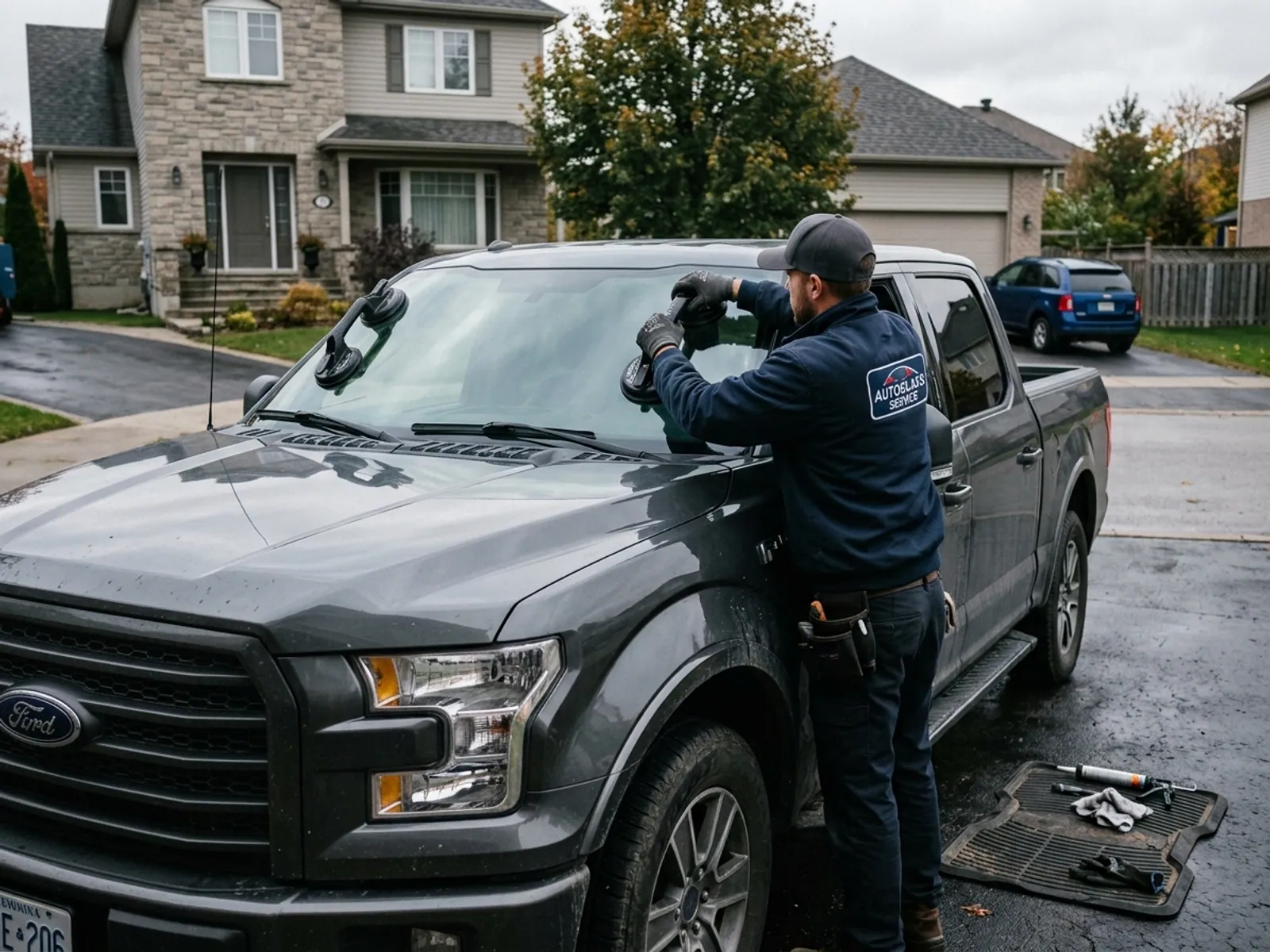
A windshield is a structural part of the vehicle, not a window. It is bonded to the body, it helps the roof resist collapse in a rollover, and on most vehicles it is the backstop the passenger airbag inflates against. That is why replacement is a bonded, cured, torque-sensitive job rather than a panel swap — and why the adhesive and the cure time matter as much as the glass itself.
If the damage is longer than a few inches, sits in your line of sight, reaches the edge of the glass, or has already started to run, replacement is usually the honest answer. Below is what actually happens, what moves the price, and what to check before you book.
Is this you?
When you need windshield replacement
- The crack is longer than roughly six inches, or is still growing.
- Damage sits within the driver’s primary line of sight, where even a good repair leaves visible distortion.
- The break reaches the edge of the glass — edge cracks run, because that is where the stress is concentrated.
- There are multiple chips clustered together, or a chip with legs radiating from it.
- The inner layer of glass is damaged, not just the outer layer.
- Something has penetrated the glass completely.
Making the call
Repair or replace?
Repair is the better outcome when it is genuinely available: it is faster, it costs less, it keeps the factory seal intact, and it keeps a windshield out of a landfill. A resin repair works by filling the void and restoring optical clarity and structural continuity — it does not make the damage vanish, and a faint blemish normally remains.
The practical dividing line is size, depth, location and age. Small chips and short cracks away from the edge and away from your sightline are usually repairable. Long cracks, edge damage, contaminated breaks and damage in the sightline are usually not.
Age matters more than people expect. A fresh chip that has not yet collected dirt and moisture repairs far better than the same chip a month later. If you are undecided, that argues for deciding quickly.
What actually happens
The job, step by step
No mystery and no jargon for its own sake. This is what a technician does and why each step matters.
Confirm the exact glass
Windshields vary by trim, not just by model. Rain sensors, humidity sensors, heated wiper park areas, acoustic interlayers, heads-up display, camera brackets, antenna elements and shade bands all change the part. This is why a VIN gets you an accurate quote and a year/make/model alone often does not.
Protect the vehicle and remove trim
Covers over the hood, dash and seats. Cowl panel, wipers, mouldings and any interior trim around the A-pillars come off so the glass edge is fully accessible.
Cut out the old glass
The old urethane bead is cut and the glass lifted out. The pinchweld — the painted flange the glass bonds to — is then trimmed back to a thin, even layer of existing urethane rather than bared to metal. Exposed bare metal has to be primed, because urethane bonded to unprotected steel is where rust and future leaks start.
Prime and lay the bead
Glass is cleaned and primed on the bonding surface. A continuous urethane bead of the correct height and profile is laid — continuous being the operative word, since a gap in the bead is a future wind noise and water leak.
Set the glass
The windshield is set into the bead, positioned to the correct gaps, and pressed to full contact. Alignment is fixed at this moment; the adhesive does not permit a second attempt once it has started to skin.
Reassemble, then cure
Trim, cowl and wipers go back on. The vehicle then has to sit until the adhesive reaches minimum drive-away strength. That interval is a property of the specific adhesive, the air temperature and the humidity — not a fixed number. Your technician will give you the figure for the product actually used on your vehicle.
Recalibrate the camera, where fitted
If a forward-facing camera is mounted to the windshield, it is aimed relative to the glass. New glass means the camera has moved, and it has to be recalibrated before the driver-assistance systems can be trusted.
Transparent pricing
What moves the price
We do not publish a fixed price, because there is not one. These are the variables that decide your quote.
- Vehicle and trim
- Glass availability and part cost vary enormously between a common sedan and a low-volume or recent model.
- Glass features
- Acoustic interlayer, heating elements, heads-up display, rain and light sensors, and shade bands all raise the part cost.
- Camera and sensor hardware
- A windshield carrying a driver-assistance camera costs more, and adds a required recalibration step.
- Calibration type
- Static calibration needs targets and controlled space. Dynamic calibration needs a road drive. Some vehicles need both.
- Mouldings and clips
- Many vehicles use single-use mouldings and clips that must be renewed rather than reused.
- Rust or prior damage at the pinchweld
- Corrosion found under the old glass has to be treated properly. Bonding new glass over rust guarantees a repeat failure.
- Where the work happens
- Some calibrations cannot be completed in an open car park and need controlled conditions.
How long it takes
The glass work itself is commonly in the one-to-three hour range for a straightforward vehicle. The part that people underestimate is the adhesive cure before the vehicle is safe to drive, and any recalibration afterwards. Plan for the appointment and the cure, not just the fitting.
Mobile service
This is normally a mobile job. A technician comes to your home, office or another address you nominate, works at the vehicle, and leaves once the installation is complete and safe. Mobile work needs a reasonably level parking space and, in wet or high-wind weather, either covered parking or a rescheduled slot — adhesive and glass both behave badly in the rain.
Cameras and sensors
If your vehicle has lane-keeping, automatic emergency braking, adaptive cruise or traffic-sign recognition, there is almost certainly a camera looking through the windshield. Replacing the glass moves that camera. Recalibration is not an upsell — an uncalibrated camera can misjudge where the lane and the car in front actually are.
Before you call
What to send for an accurate quote
Five minutes gathering this saves a revised quote later.
- 01The VIN. This is the single most useful thing you can send — it resolves trim and glass features exactly.
- 02A photo of the damage, taken from outside the vehicle.
- 03A photo of the area behind the rear-view mirror, from inside, showing any camera or sensor housing.
- 04Whether the vehicle currently drives and where it is parked.
- 05The ZIP code where you want the work done.
Afterwards
Looking after the work
- Leave any retention tape in place for as long as your technician specifies.
- Avoid slamming doors for the first day — the pressure spike pushes against a green adhesive bead.
- Leave a window slightly open when parked in the heat for the first day, for the same reason.
- Keep the vehicle out of a high-pressure car wash for a few days.
- If you hear wind noise or see water where there was none, call — that is a fixable bead issue and it does not improve on its own.
Questions we actually get asked
Can I drive straight after a windshield replacement?
Not immediately. The urethane needs to reach a minimum drive-away strength first, and that time depends on the specific adhesive, the temperature and the humidity on the day. Your technician will tell you the figure for the product used on your vehicle. Treat any shop that says "drive away right now" regardless of conditions as a warning sign.
Will my insurance cover it?
Windshield damage is typically handled under comprehensive coverage rather than collision, and your deductible determines what you actually pay. Texas policies vary and some carriers offer a separate glass endorsement. Check the specifics with your insurer — we can help with the paperwork, but only your carrier can confirm your coverage.
Is OEM glass necessary?
Not always, and the terminology matters. OEM glass carries the vehicle manufacturer’s branding. OE-equivalent glass is made to the same specification, often by the same manufacturer, without the branding. Both can be appropriate. What matters more is that the glass matches the features your vehicle actually needs — the correct sensor cutouts, bracket, interlayer and optical quality, particularly where a camera has to see through it.
How long does the whole appointment take?
The fitting is commonly one to three hours on a straightforward vehicle. Add the adhesive cure before driving, and add recalibration if the vehicle has a windshield camera. We will give you a realistic total when we know the vehicle.
What if you find rust under the old windshield?
We stop and tell you. Light surface corrosion at the pinchweld can often be treated and primed during the job. Significant rust is a bodywork repair, and bonding new glass over it would simply hide a problem that comes back as a leak. We would rather have an awkward conversation than install glass onto a surface that cannot hold it.
Tell us what happened to your glass
Send the VIN and a photo and we will come back with a real number — the glass your vehicle actually takes, whether it needs camera recalibration, and when we can be there.