 Glass
GlassDallas & DFW · Mobile service
Windshield chip and crack repair
Resin injection that fills a chip or short crack, restores most of the optical clarity, and stops the damage spreading — without replacing the glass.
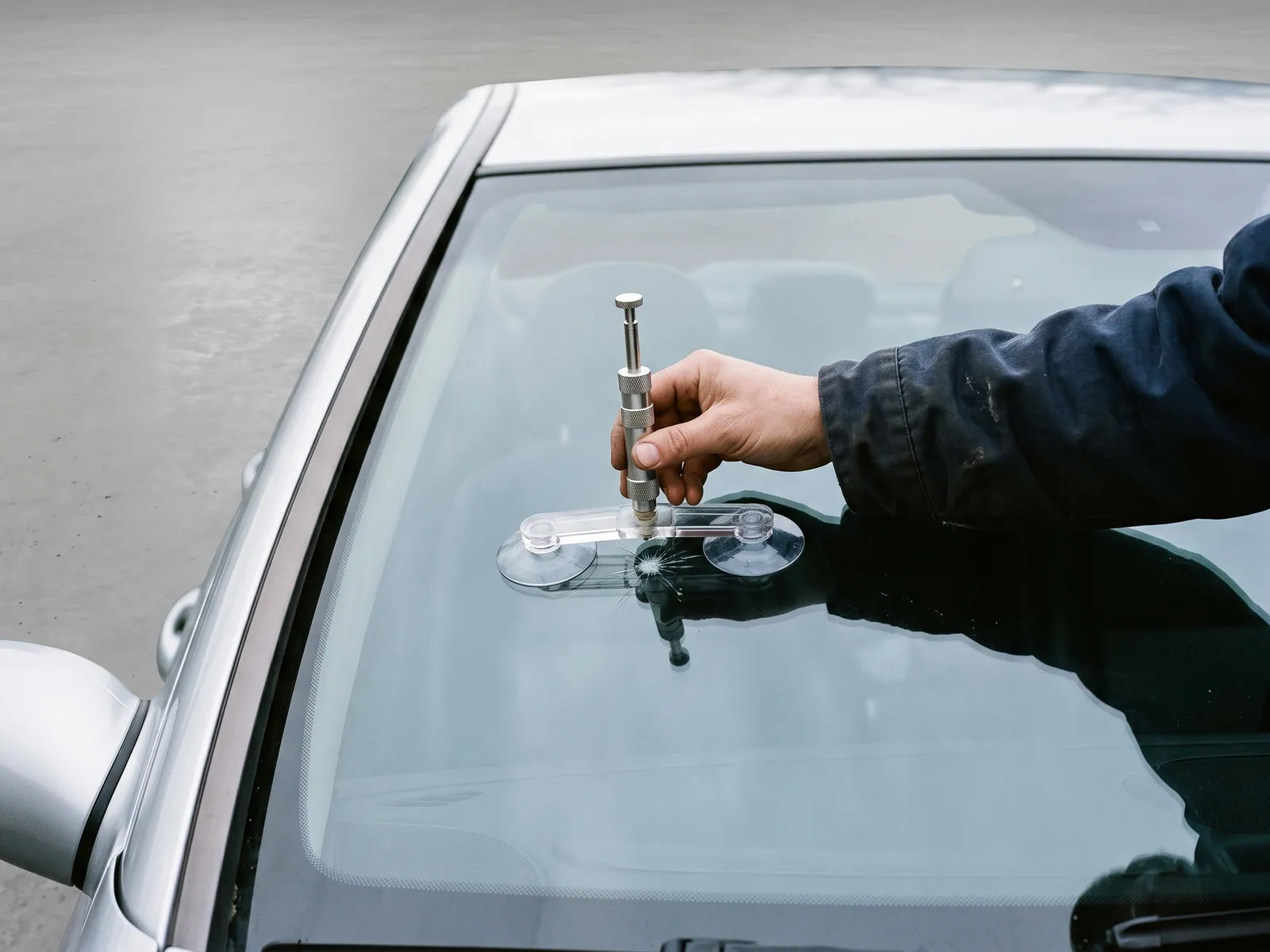
A repair is worth doing when it is genuinely available. It takes a fraction of the time of a replacement, it costs considerably less, and it leaves the factory glass-to-body seal untouched — which is the seal least likely to ever leak, because it was made in a controlled factory environment.
What a repair will not do is make the damage invisible. Resin restores strength and most of the clarity. A faint mark almost always remains. Anyone promising a chip will disappear completely is overselling.
Is this you?
When you need windshield repair
- A rock chip, bullseye, star break or combination break roughly the size of a quarter or smaller.
- A short crack, generally under about six inches, away from the edge of the glass.
- Damage outside the driver’s primary line of sight.
- Damage that is recent and has not yet filled with dirt, wax or water.
- Only the outer layer of glass is broken.
Making the call
Why speed genuinely matters here
A chip is an open void in the outer layer of glass. From the moment it forms it starts collecting road dirt, wax, water and air. Contamination is the main reason a repair comes out cloudy instead of clear — resin cannot bond well to a dirty fracture surface, and it cannot displace water that has already frozen and thawed inside the break.
Texas heat compounds it. A hot windshield hit with cold air conditioning, or a cool morning windshield hit with direct sun, puts the outer layer under real thermal stress. That is when a stable chip becomes a running crack, and a repairable chip becomes a replacement.
The practical advice is unglamorous: get it looked at within days rather than months, and in the meantime keep clear tape over it to keep dirt and water out. Do not wash the vehicle, and go easy on the temperature swings.
What actually happens
The job, step by step
No mystery and no jargon for its own sake. This is what a technician does and why each step matters.
Assess and clean
The break is inspected to confirm it is repairable and that the damage is confined to the outer layer. Loose glass fragments are cleared from the pit.
Fit the injector
A bridge and injector are sealed over the break so pressure can be applied to the void rather than the surface.
Draw out the air and moisture
Vacuum is applied to pull air and trapped moisture out of the fracture. This step is what separates a clear repair from a cloudy one, and it is the step that gets rushed.
Inject the resin
Resin is forced under pressure into the void and worked into the legs of the break. Cycles of pressure and vacuum are repeated until the break stops accepting resin.
Cure and finish
The resin is cured with ultraviolet light, the surface pit is filled and levelled, and the excess is scraped flush and polished so a wiper blade passes over it cleanly.
Transparent pricing
What moves the price
We do not publish a fixed price, because there is not one. These are the variables that decide your quote.
- Number of chips
- Additional breaks on the same visit cost less than the first, since the setup is already done.
- Type of break
- A simple bullseye fills predictably. A combination break with several legs takes longer and more resin.
- Age and contamination
- An old, dirty break takes more cycles to clean out and still finishes less clear.
- Whether insurance is involved
- Some policies waive the deductible on a repair, because carriers would rather fund a repair than a replacement.
How long it takes
A single chip is typically a short job — commonly under an hour on site, including setup. There is no adhesive cure, so there is no waiting period before you drive.
Mobile service
Repairs are well suited to mobile work and are frequently done in an office car park while you are inside. The glass does need to be reasonably cool and dry, so a shaded spot beats full afternoon sun.
Before you call
What to send for an accurate quote
Five minutes gathering this saves a revised quote later.
- 01A close photo of the chip with something for scale — a coin next to it works well.
- 02A second photo from a step back, showing where on the glass the damage sits.
- 03Roughly when it happened.
- 04Year, make and model.
- 05The ZIP code where the vehicle will be.
Afterwards
Looking after the work
- You can drive immediately — there is no cure time on a resin repair.
- A faint blemish where the chip was is normal and expected.
- The repair stops that break spreading. It does not armour the rest of the windshield against the next rock.
Questions we actually get asked
Will the chip disappear completely?
No. A good repair restores structural integrity and most of the optical clarity, and stops the damage spreading. A faint mark normally remains, and how visible it is depends on the type of break and how much contamination got in before the repair.
How long can I leave a chip before repairing it?
Technically you can drive with it. Practically, every day increases the chance it fills with dirt or runs into a crack. Fresh breaks repair better. If you cannot get to it immediately, put clear tape over it to keep water and dirt out.
Does a repair weaken the windshield?
A properly executed repair restores much of the strength lost to the break. The alternative — leaving an open fracture in the outer layer — is the weaker option, because the break concentrates stress and grows.
Will insurance pay for a chip repair?
Often, and sometimes without a deductible, because a repair is far cheaper than the replacement it prevents. Coverage varies by policy and carrier, so confirm with your insurer.
Can you repair a chip right in front of the driver?
We generally advise against it. Even an excellent repair leaves slight distortion, and distortion directly in your primary line of sight is worth avoiding. In that position, replacement is usually the better call.
Tell us what happened to your glass
Send the VIN and a photo and we will come back with a real number — the glass your vehicle actually takes, whether it needs camera recalibration, and when we can be there.