 Glass
GlassWindshield damage types — bullseye, star, combination and the rest
Technicians name these things for a reason — the shape of a break predicts how it behaves and whether resin will hold it.
Written by the Glass Genie team. Technical review by a named technician is pending — see our editorial approach.
When a technician looks at your windshield and says "that is a combination break with two legs", they are not showing off. The shape of a break predicts how it is going to behave: whether it will run, whether resin will fill it cleanly, and whether you are looking at a repair or a replacement.
Here is the whole vocabulary, and what each one means for you.
First: the two layers
A windshield is laminated — two sheets of glass bonded either side of a plastic interlayer. Almost every break described below is damage to the outer layer only. The interlayer and the inner layer are usually intact, which is why the glass holds together.
That matters because resin repair works by filling a void in the outer layer. Once damage reaches the interlayer or the inner glass, there is nothing a repair can do. The fingernail test settles it: if you can feel the break from inside the cabin, the inner layer is involved.
Full detail in laminated vs tempered glass.
Chip damage
Bullseye
A clean circular break with a dark cone beneath the impact point, looking like a small dartboard. Caused by a rounded object — most often a stone hitting squarely.
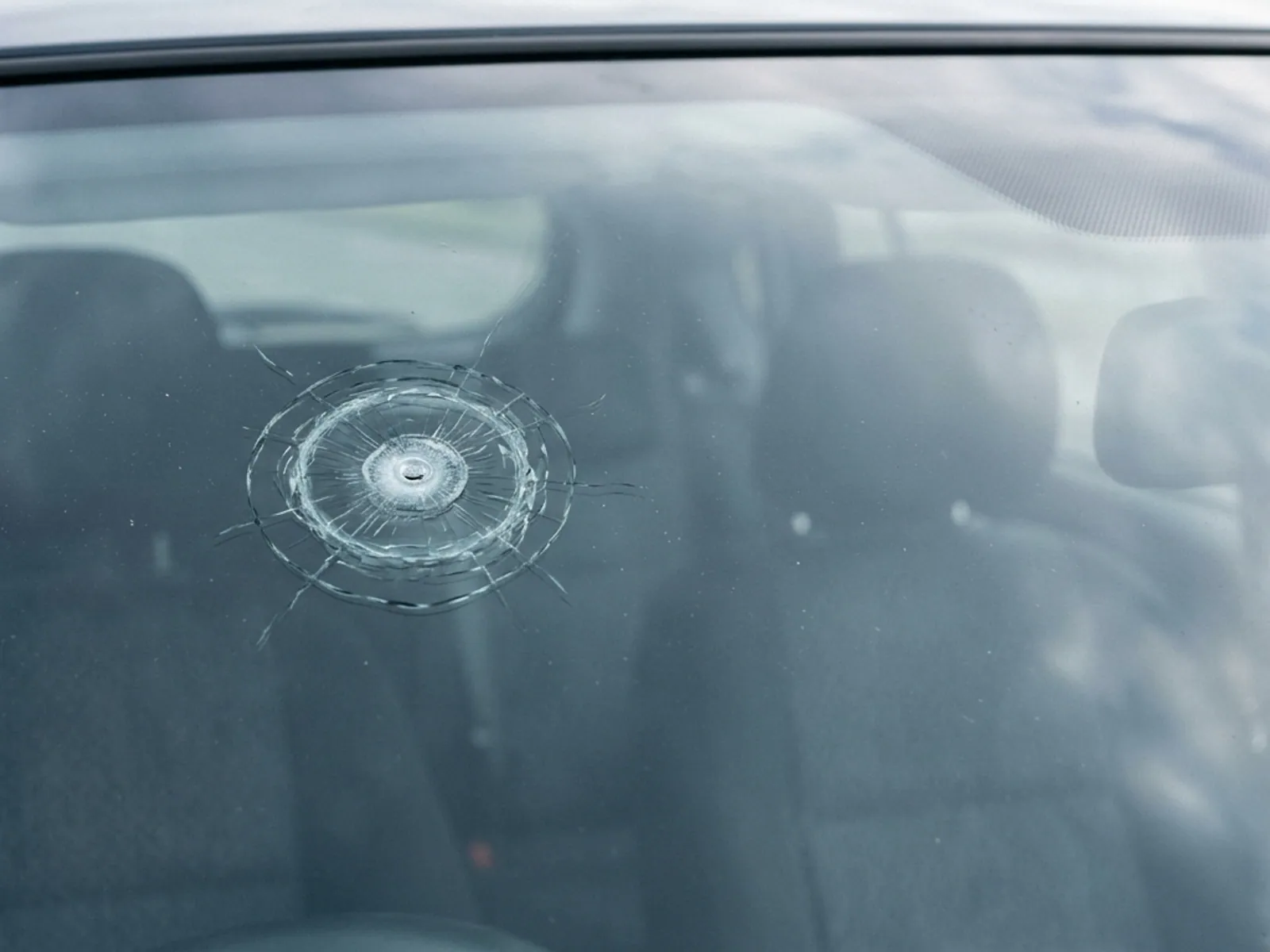
Behaviour: stable. Bullseyes are the best-behaved damage there is. The circular shape distributes stress evenly around the perimeter rather than concentrating it anywhere.
Repairable: yes, and this is the ideal case. Resin flows into a bullseye predictably and the result is often close to invisible.
Half-moon (partial bullseye)
A bullseye that did not complete — a semicircle rather than a full circle, caused by a glancing rather than a square impact.
Behaviour: stable, similar to a bullseye.
Repairable: yes, though the finished result is sometimes slightly less clean because the break edge is less regular.
Star break
A central impact point with cracks radiating outward like spokes. The individual cracks are called legs.
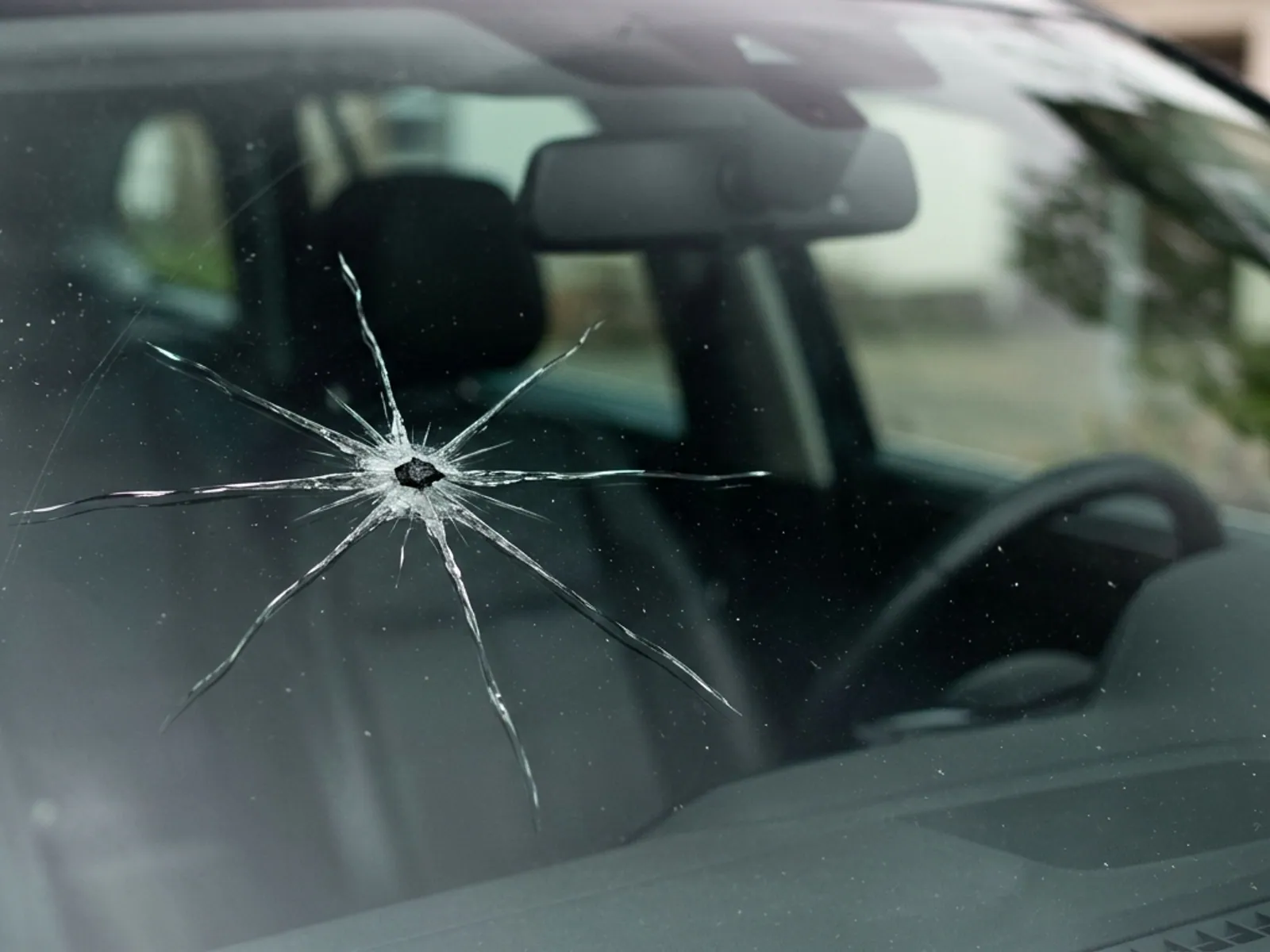
Behaviour: this is the one to act on quickly. Each leg is a crack tip, and crack tips are where stress concentrates. A star break with three short legs can become a star break with one very long leg after a single hot afternoon and a blast of air conditioning.
Repairable: usually, if the legs are short and the overall damage is roughly quarter-sized. The repair has to fill every leg, not just the centre, which is why it takes longer than a bullseye.
Combination break
Exactly what it sounds like — a bullseye or half-moon with legs radiating from it. Very common, because most real-world impacts are messy.
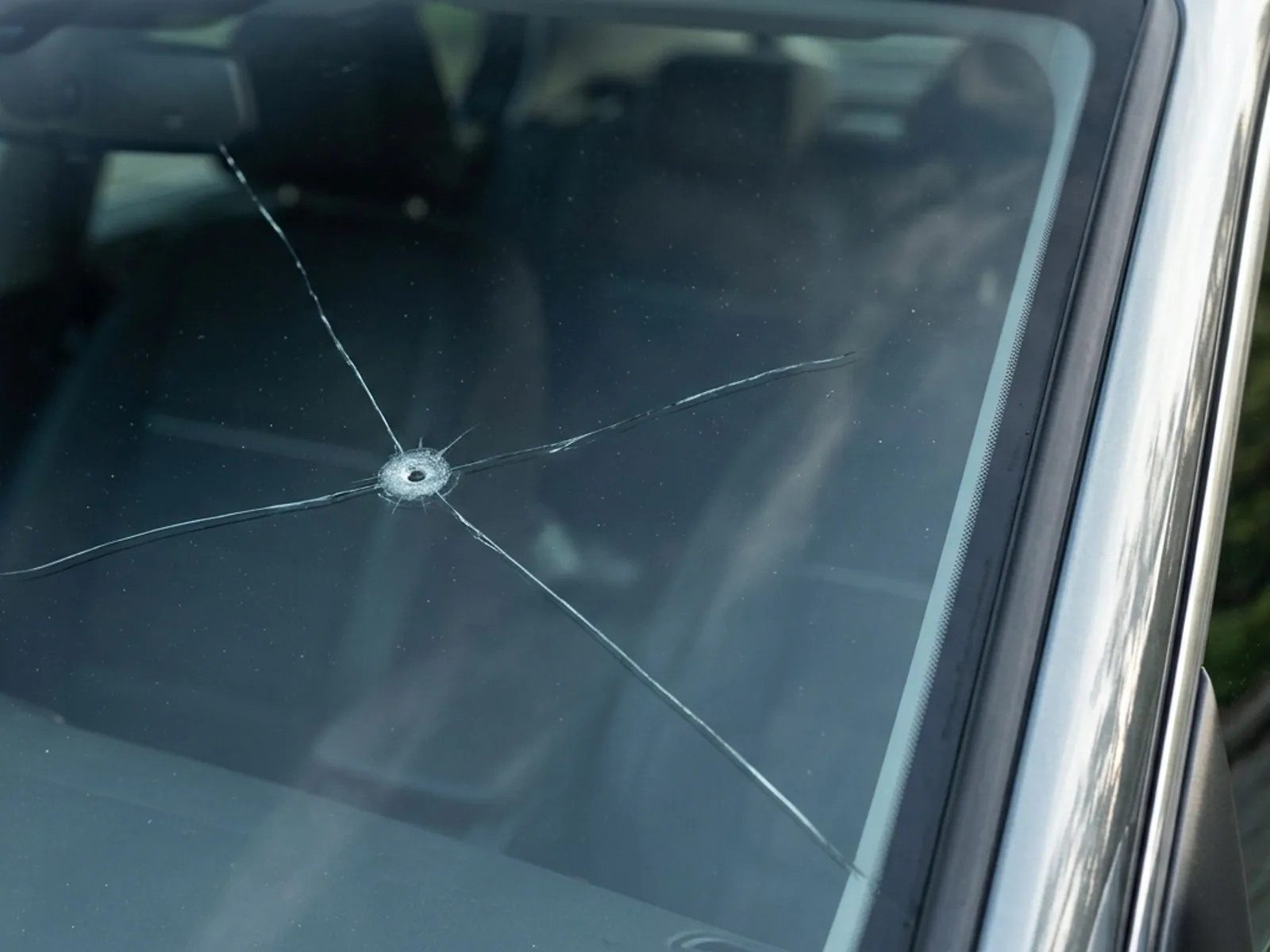
Behaviour: unpredictable. It has both the crushed centre of a bullseye and the running risk of a star.
Repairable: often, but with more caveats than either component alone. Expect a slightly more visible result.
Pit
A shallow surface crater with no crack structure beneath it — the very top layer of glass chipped away.
Behaviour: stable. A pit is not going to run, because there is no fracture to propagate.
Repairable: a single pit is usually cosmetic and often left alone. If it sits in the wiper path it can catch a blade, and it can be filled and levelled.
The problem with pits is plural — see pitting below.
Cracks
Edge crack
A crack that starts at or reaches within roughly two inches of the perimeter of the glass.
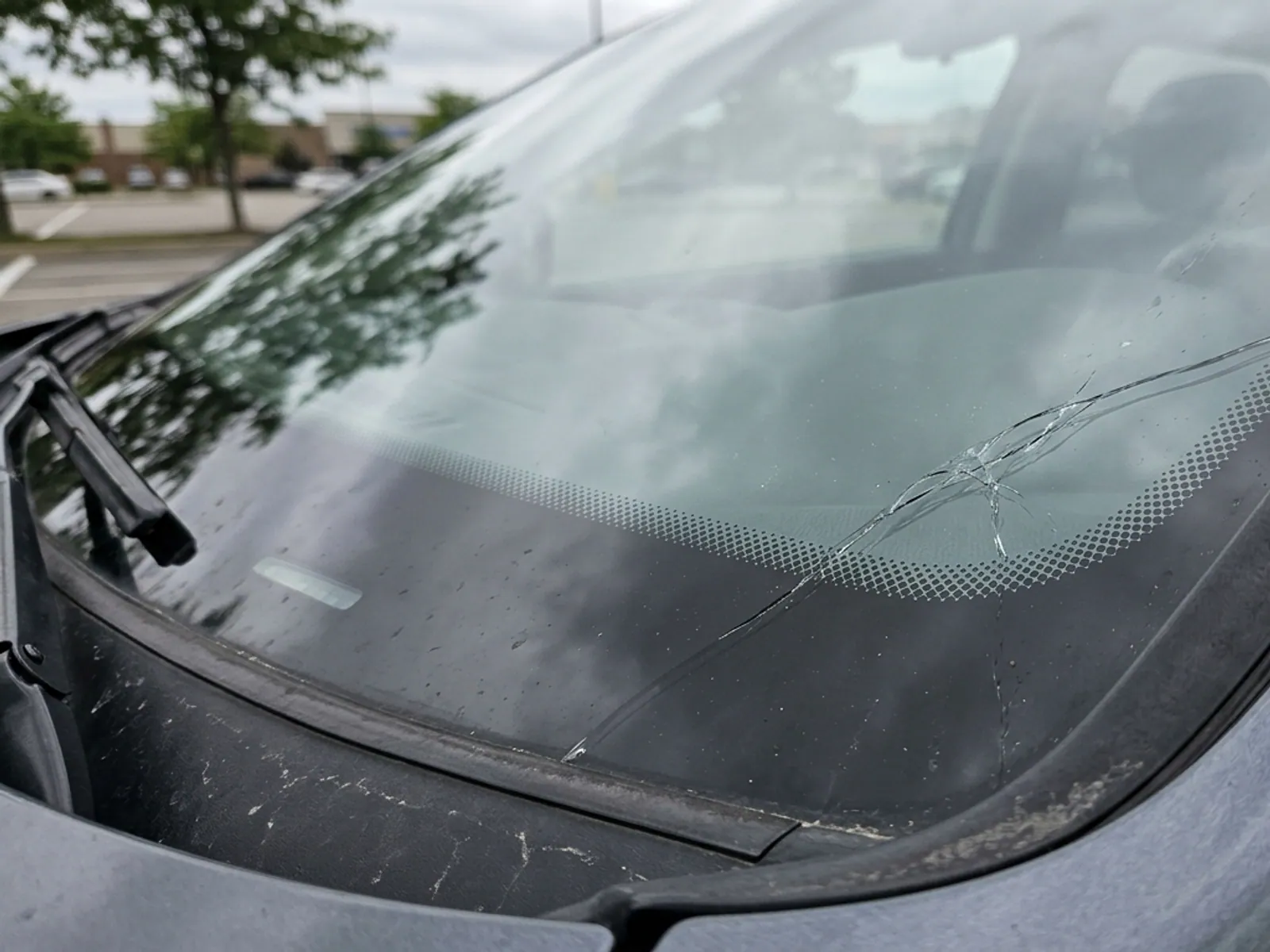
Behaviour: the worst-behaved damage on this page, and the reason technicians ask where a crack ends before they ask how long it is. The edge is where the glass is bonded to the body, and it is where stress from body flex, door slams and thermal expansion concentrates. A crack that reaches the edge has found the most favourable possible conditions to keep growing.
Repairable: usually not, regardless of length. Filling it puts resin into a fracture that is going to keep running anyway.
Floater crack
A crack that begins somewhere in the middle of the glass, not at the edge, usually from an impact.
Behaviour: better than an edge crack. It still grows, but without the stress concentration of the perimeter.
Repairable: sometimes, if it is short — generally under about six inches — and away from the driver's sightline.
Stress crack
A crack that appears with no impact at all. You walk out to the car and it is there.
Behaviour: these are the ones people find unnerving, and they are more common in Texas than most places. They come from thermal stress — a large temperature differential across a single pane, usually with a small pre-existing edge defect providing the starting point. Air conditioning onto hot glass is the classic trigger.
Repairable: rarely. A stress crack tends to start at the edge, and it is telling you the glass is already under load. See why cracks spread in Texas heat.
Long crack
Anything over about twelve inches.
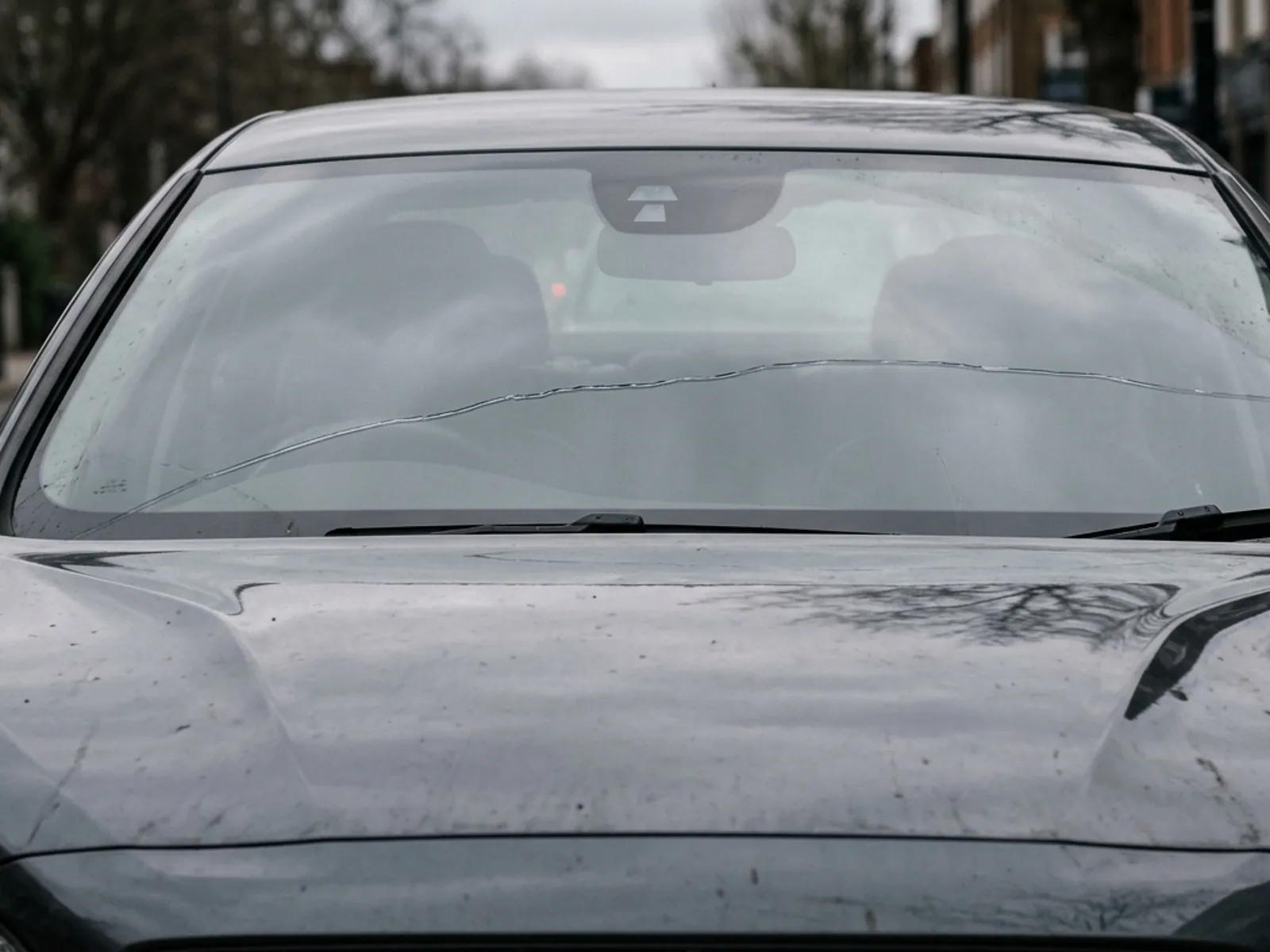
Behaviour: it will keep going. A crack of that length has enough stored energy at the tip to propagate on relatively small provocation.
Repairable: no, in practical terms. Some shops advertise long-crack repair; the result is structurally marginal and visually poor, and it is rarely the right call on a windshield you have to look through.
Surface damage
Pitting
Not one break but hundreds of microscopic craters spread across the glass, from years of sand, grit and road debris — or from a single severe hailstorm.
Behaviour: cumulative and invisible until the light is wrong. On a clear afternoon you will not notice it. Driving west on I-30 at sunset, or facing oncoming headlights in rain, the whole windshield turns into a wall of glare.
Repairable: no. The surface is abraded rather than fractured — there is no void to fill. Polishing removes glass and introduces optical distortion, which is worse.
This is the most under-reported windshield problem there is. Drivers attribute the glare to their eyesight and keep going for years. If night driving has got noticeably harder and your glass is old, look at it from inside with light passing through at a low angle.
Wiper scratches
Arc-shaped scratches following the wiper path, from running blades over grit or running them worn down to the metal.
Behaviour: stable but permanent.
Repairable: no. Prevention is the whole strategy — replace blades before they harden, and never run wipers across a dry, dusty windshield.
Quick reference
| Type | Runs? | Repairable | Priority |
|---|---|---|---|
| Bullseye | Rarely | Yes | Soon |
| Half-moon | Rarely | Yes | Soon |
| Star break | Readily | Usually | Fast |
| Combination | Readily | Often | Fast |
| Pit | No | Cosmetic | Low |
| Edge crack | Aggressively | Rarely | Replace |
| Floater crack | Yes | If short | Fast |
| Stress crack | Yes | Rarely | Replace |
| Long crack | Yes | No | Replace |
| Pitting | n/a | No | Replace when glare is a problem |
| Wiper scratches | No | No | Replace if in sightline |
The two things that decide it
Everything above reduces to two questions.
Where is it? Edge damage and sightline damage are replacements almost regardless of size. A break in the lower passenger corner is the most forgiving position on the glass.
How old is it? A chip is an open void collecting dirt, wax and water from the moment it forms. Resin cannot bond to a contaminated fracture and cannot displace water already frozen and thawed inside it. A fresh break repairs close to clear. The same break in three months does not.
Which is why the practical advice for every repairable type on this page is the same: tape it and book it this week, not next season.
Not sure which of these you have? Send two photos — one close with a coin for scale, one from a step back showing where on the glass it sits — and we will identify it and tell you honestly whether it is repairable.
If it is not, here is what windshield replacement involves.
Sources
Where this guide makes a technical, safety or regulatory claim, these are the references behind it.